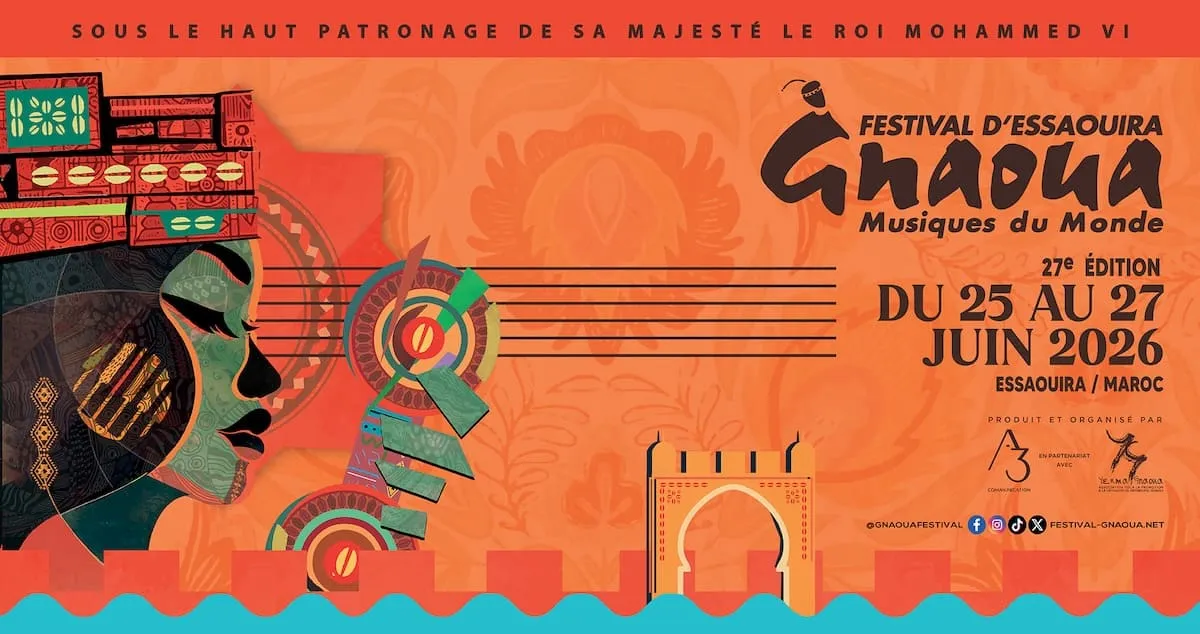
Every year in June, Essaouira hosts the Gnaoua (Gnawa) Festival, which celebrates the mystical music of the Gnaouas. The city of Essaouira, situated on the Atlantic coast, offers one of Morocco’s best anchorages, and its medina - a well-preserved walled city dating from the late 18th century, has been recognised as a UNESCO World Heritage Site.
This year, 2026, the festival celebrates its 27th edition! From 25 to 27 June 2026.
Gnaoua Festival: Visitors from all over the world
The Gnaoua Festival in Essaouira, Morocco, attracts several hundred thousand visitors from all over the world every year, who come to celebrate the city’s unique culture and enjoy performances by renowned jazz musicians and artists. This three-day event features Gnaoua music and art exhibitions that draw huge crowds. For this year’s festival, 460 artists from Morocco and all corners of the globe will come together for three days of cultural exchange and original creations, across numerous venues throughout the city: Place Moulay Hassan, the beach stage, Borj Bab Marrakech, Dar Souiri, Bayt Dakira, Zaouia Issaoua and Zaouia Sidna Bilal.
As is the case every year, Gnaoua singers are given their own dedicated stages in the medina, allowing fans to interact with iconic figures such as Hamid El Kasri. The ‘lilas’ - these authentic Gnaoua trance ceremonies held in the middle of the night, remain one of the most eagerly anticipated events for festival-goers who are most devoted to the tradition.
Gnaoua Festival 2026: The program
| Day | Date | Main Program |
|---|---|---|
| Thursday | 19 June 2025 | Opening Concert: Maâlem Hamid El Kasri, Compagnie Bakalama, Abir El Abed, Kya Loum Fusion Performance: Maâlem Houssam Gania & Marcus Gilmore Featuring: Maâlem Hamid El Kasri, Kya Loum, Compagnie Bakalama, Marcus Gilmore, Abir El Abed, Anas Chlih, and Hajar Alaoui |
| Friday | 20 June 2025 | CKay (Afrobeats sensation) |
| Saturday | 21 June 2025 | Maâlem Mohamed Boumezzough with Anas Chlih, Aly Keïta, Tao Ehrlich, Martin Guerpin, Quentin Ghomari & Hajar Alaoui (Fusion Performance) Featuring: Maâlem Hamid El Kasri, Maâlem Mohamed Boumezzough, Tao Ehrlich, Quentin Ghomari, Martin Guerpin, Aly Keïta, Abir El Abed, and Anas Chlih |
Themed stages and world music
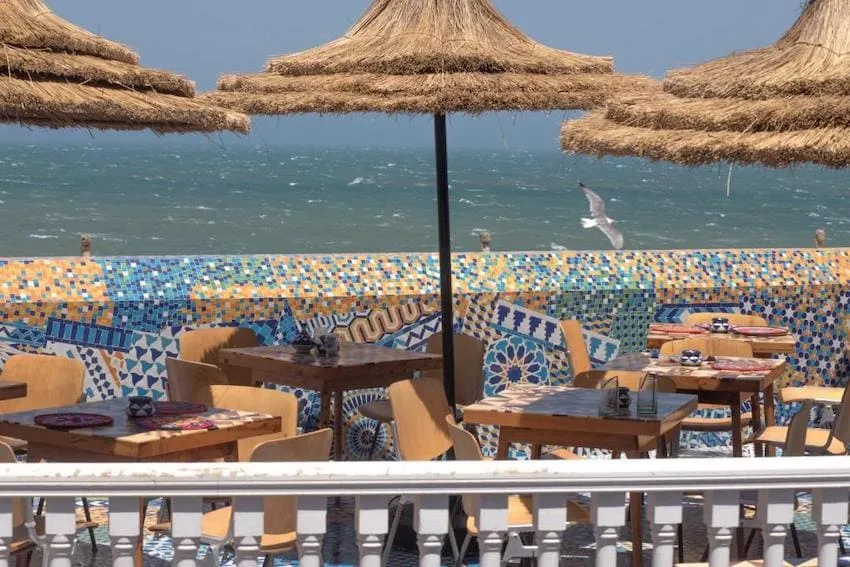
In Essaouira, the Gnaoua Festival isn’t confined to a single stage, but takes place throughout the city, which is transformed into a veritable open-air theatre. At the heart of the event, Moulay Hassan Square hosts the main stage, a vast and vibrant space where large crowds gather for the major concerts. Facing the ocean, the beach stage offers a more relaxed and eclectic atmosphere, carried by the Atlantic winds and the rhythms of the world.
In the medina, venues steeped in history such as the Borj Bab Marrakech, Dar Souiri and Bayt Dakira host more intimate concerts, perfect for socialising and listening. Finally, the zaouias, notably those in Issaoua and Sidna Bilal, offer a rare immersion in the spiritual essence of Gnaoua music, in settings that seem almost timeless.
With its many stages offering distinct yet complementary programmes, there is something for every festival-goer at the Gnaoua Festival. The standard of excellence remains as high as ever.
Gnaoua, fusion and jazz
An evening’s entertainment usually consists of several segments. Early in the evening, Gnaoua music takes centre stage, followed by performances by non-Gnaoua jazz musicians.
People eagerly await the start of the evening, when the Gnaoua Maâlems (masters) and their ensembles begin to perform. The Maâlems use bowed lutes, such as the gogo, and plucked-string lutes, such as the gimbri, also known as the hajhuj, a three-stringed bass instrument, all of which are deeply rooted in their traditions.
The traditional spiritual music of the Gnaoua has been transformed by the Essaouira Gnaoua Festival, which has infused it with jazz, blues, reggae and hip-hop. Every year, the festival creates one of Morocco’s biggest public events and one of the most exhilarating jam sessions by bringing together renowned musicians to exchange ideas and blend their music with Gnaoua music.
The Berklee at Gnaoua programme
A new initiative that is here to stay: the ‘Berklee at Gnaoua’ programme returns for its third year, from 22 to 27 June 2026, under the direction of Leo Blanco, a lecturer at Berklee. Since its launch in 2024, the programme has already brought together 118 musicians from 30 countries for an intensive week of intercultural musical studies alongside the festival. The theme for the 2026 edition, ‘Listen with a global ear, play with a global concept’, reflects the emphasis on breaking down genre boundaries through practical collaboration.
Ticketing
The Gnaoua Festival remains a largely free event, accessible to all. Concerts on the two main stages (Moulay Hassan and the beach) are completely free of charge. For ticketing to reserved areas, the organisers offer a 3-day Pass or a 1-day Pass, granting access to the areas in front of the two main stages, as well as separate tickets for intimate concerts at Dar Souiri, Bayt Dakira, Borj Bab Marrakech, Zaouia Issaoua and Zaouia Sidna Bilal, sold for 250 dirhams per evening at the festival’s official shop.
Gnaoua Festival: Some key figures
Here are some key figures on the Essaouira Gnaoua Festival:
- The festival was established in 1998 and has since attracted internationally renowned artists such as Robert Plant, Marcus Miller, and Tinariwen, as well as local and regional musicians.
- The festival usually lasts four days, and takes place in the summer, usually in June.
- Each year the festival attracts around 500,000 visitors, with participants coming from all over the world to attend concerts, workshops and other events.
- The festival is also a major economic event for the city of Essaouira, generating around 200 million Moroccan dirhams (around €18 million) in economic benefits.
- In addition to the music, the festival also includes cultural events such as art exhibitions, film screenings, and lectures on Gnawa music and its historical and cultural roots.